Staging a tournament across three countries and 16 stadiums is, as Technology Magazine puts it, "a logistical mountain." FIFA's answer at the FIFA World Cup 2026 is to build a virtual copy of every venue and run operations against it in real time. Using Lenovo's Digital Twin technology, each of the 16 stadiums gets a hyper-accurate virtual map that tracks crowd flow, security deployments, and technical systems as they happen.
The promise is prevention. "If a bottleneck forms at a specific gate in Atlanta, officials see it on their digital map before it becomes a problem," Technology Magazine reports. Rather than reacting to a crush at a turnstile, a command center can watch the buildup form and redirect people before it turns dangerous.
How A Digital Twin Works Here
A digital twin is a live, data-fed virtual model of a physical place — not a static blueprint but a continuously updated mirror. For a World Cup stadium, that means streaming in real-time inputs (gate scans, camera data, system status) so the virtual map reflects the real building minute by minute. Officials watch crowd density, the position of security teams, and the health of technical systems on one map, and act on a forming problem instead of a present one. It is the difference between a fire alarm and a smoke detector.
Fans Get The Twin, Too
The technology is not confined to the command center. Through Lenovo and Motorola devices, fans can tap the digital twins to navigate the cavernous venues, Technology Magazine reports — the fastest route to a seat, the nearest water station, directions to local landmarks in host cities from Seattle to Guadalajara, all with live updates. The same model that helps officials manage a crowd helps individuals avoid being stuck in one.
The Security Layer: Robot Dogs
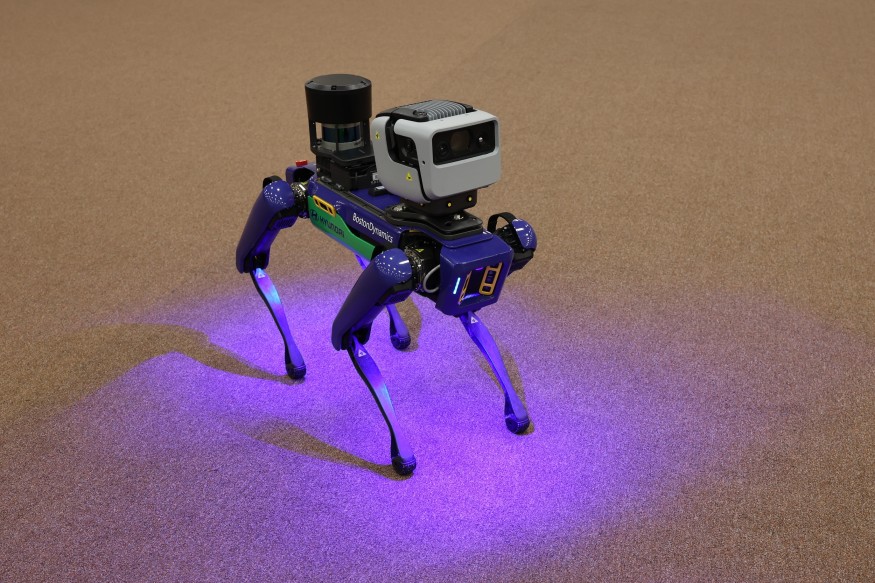
Crowd management is one half of stadium safety; physical security is the other, and parts of it are going robotic. In Mexico, Al Jazeera reports, police will deploy four-legged robots — not canine units, robotic ones. The machines are built to enter dangerous areas and broadcast live video back to security forces, who can size up a situation before acting.
The robots were acquired for 2.5 million pesos — about $145,000 — by the city council of Guadalupe, part of the Monterrey metro area. They will be deployed "in case of any altercation," said Guadalupe Mayor Hector Garcia, to support officers "with initial intervention ... to protect the physical safety of officers."
The Reasonable Questions
Pervasive venue monitoring and robotic security carry the questions that always travel with them: how much crowd-flow and camera data is retained, who can access it, and where safety logistics end and surveillance begins. FIFA and local authorities frame these systems around crowd safety and officer protection — a real and defensible aim, and the kind of tooling that genuinely prevents the deadly crushes football has suffered before. It is also, by design, a comprehensive monitoring apparatus. Both things are true at once, and the honest version of this story holds them together rather than picking one.
Bottom Line
The 2026 World Cup is being run, in part, on virtual replicas of its own stadiums — 16 digital twins that turn crowd safety from reaction into prevention, plus a fan-facing navigation layer and, in Mexico, robotic units taking on the riskiest security tasks. FIFA President Gianni Infantino has billed the event as "the greatest show ever on planet Earth." Whatever the show, the stadiums behind it are now as much software as steel.
Frequently Asked Questions
What is a stadium digital twin? A live, continuously updated virtual model of a real venue, fed by real-time data, that lets officials monitor crowd flow, security, and technical systems on a single map and act before problems escalate.
How many stadiums have one? All 16 World Cup venues, using Lenovo's Digital Twin technology.
Can fans use it? Yes. Through Lenovo and Motorola devices, fans can use the twins to navigate stadiums — routes to seats, water stations, and local landmarks — with live updates.
What are the robot dogs? Four-legged robots Mexican police will deploy for initial intervention in dangerous situations, broadcasting live video to officers. Guadalupe's council bought them for about $145,000.
Originally published on Tech Times
ⓒ 2026 TECHTIMES.com All rights reserved. Do not reproduce without permission.


