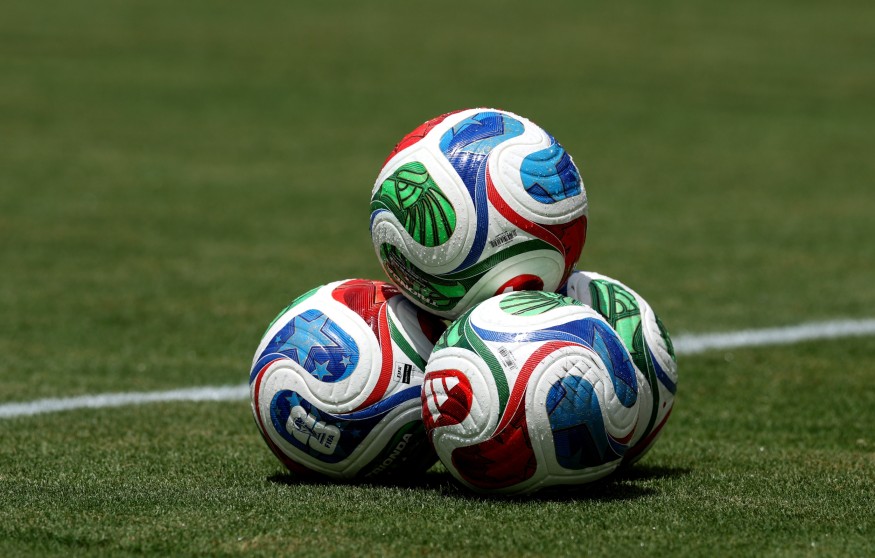
Football's most-watched object this summer is also its most heavily instrumented. The official match ball of the FIFA World Cup 2026, the Adidas Trionda, captures data 500 times every second — and, like any connected device, it has to be charged before it can take the field.
The name is the friendly part: "Trionda" is Spanish for "three waves," a nod to co-hosts Canada, Mexico, and the United States. The engineering story sits beneath the surface.
A "Heartbeat" Inside The Ball
Adidas integrated a 500Hz inertial measurement unit into the Trionda, according to Technology Magazine. Where earlier connected balls suspended the sensor in the dead center, this one is side-mounted inside a specialized layer. Recording 500 times per second, it logs every touch, acceleration, and spin — what one Adidas technician, after cutting a ball open, called giving "a heartbeat to the ball."
That heartbeat has a job. The sensor "sends precise data to the video assistant referee (VAR) system in real time, enhancing match officials' decision-making, including in relation to offside incidents," FIFA said in a statement quoted by Al Jazeera. FIFA's Head of Research & Standards, Nicolas Evans, put the function in plain terms: the sensor tells officials "what the ball is doing in a 3D space."
Why A Data Spike Beats An Opinion
The most immediate beneficiary is officiating. Take a handball or a "ghost touch" — a faint deflection that decides whether an offside line should even be drawn. These used to be judgment calls litigated on grainy replays. With the Trionda, the moment of contact throws off a definitive data spike at the exact millisecond, erasing the guesswork about whether and when the ball was touched. Paired with FIFA's AI 3D player avatars, that precise kick-point is the input that makes the upgraded semi-automated offside system run.
The Aerodynamics Got A Rebuild Too
The chip earns the headlines, but the shell was reworked. The Trionda abandons the multi-panel designs of the past for just four thermally bonded panels, per Technology Magazine. Its surface is etched with micro-textures and intentionally deep seams engineered to stabilize air drag — the same physics as the dimples on a golf ball — so flight stays predictable across radically different venues, from Monterrey's humidity to Vancouver's wind.
The Catch: It's A Device Now
The trade-off for all that intelligence is that the Trionda behaves like the electronics it contains. The connected ball needs charging before use, and FIFA keeps charged spares ringed around the pitch so a replacement is always ready. It is a small operational footnote with a large symbolic weight: the World Cup ball now lives in the same category as your earbuds and your smartwatch — something that holds a charge and streams telemetry. The romance of a ball that was just leather and air is over; this one has a battery state.
Bottom Line
The Adidas Trionda is the clearest evidence that football's hardware has gone fully digital. A 500Hz sensor converts every touch into a timestamped data point, a redesigned four-panel skin tries to make flight more consistent, and the cost of all that is a ball someone has to remember to charge. For fans, the dividend is fewer disputed ghost touches and faster, evidence-based offside calls. For Adidas and FIFA, it is the literal core the tournament's entire officiating stack is built around.
Frequently Asked Questions
What is the Adidas Trionda? The official match ball of the 2026 World Cup. "Trionda" means "three waves" in Spanish, referencing the three host nations, and the ball contains a motion sensor that feeds the officiating systems.
How fast does the sensor record? 500 times per second. The 500Hz inertial measurement unit is side-mounted inside the ball and logs every touch, acceleration, and spin.
Why does the ball need charging? Because it houses an active electronic sensor. FIFA keeps multiple charged balls ready around the pitch so play is never interrupted by a flat battery.
How does it help referees? The sensor produces a precise data spike at the millisecond of contact, which helps settle ghost-touch and handball questions and supplies the exact kick-point that the semi-automated offside system needs.
Originally published on Tech Times
ⓒ 2026 TECHTIMES.com All rights reserved. Do not reproduce without permission.


